Bunion Basics
Bunions are common foot deformities, but despite their ubiquitous nature, there’s a lot that folks don’t know about them. Are bunions really caused by high heels? Are they genetic? Can they be fixed? At Cypress Foot & Ankle Center, we help patients understand this condition and find effective ways to manage it as well. The following blog will keep you clued in to signs, symptoms, causes, and more!
What’s a Bunion Again…?
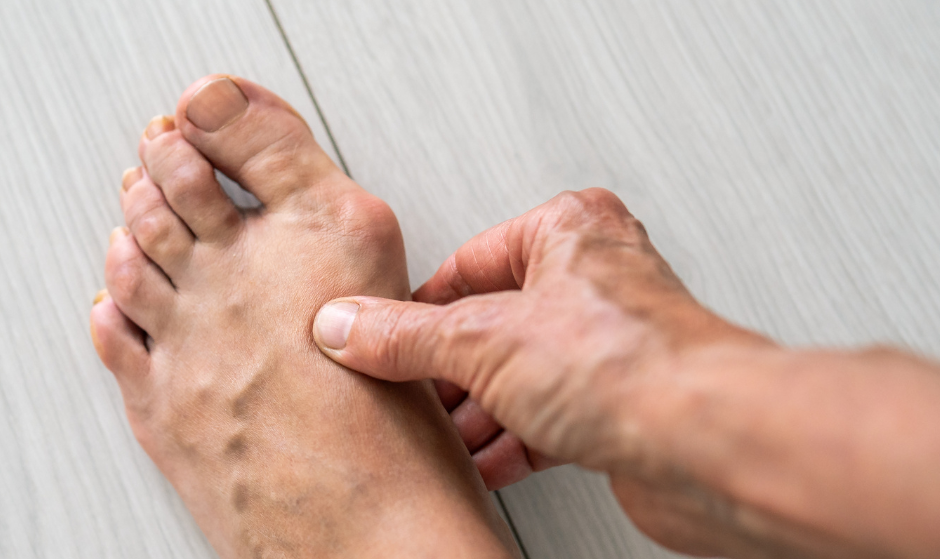
Contrary to popular belief, a bunion isn’t “the bump” itself! That’s actually a symptom.
- A bunion is a condition that involves the joint at the base of your big toe (the first metatarsophalangeal or MTP joint).
- The long bone connecting to the toe (the first metatarsal) begins to shift outward, away from the foot, while the big toe itself starts to angle inward, leaning towards the second toe.
- This misalignment forces the joint to protrude, creating the characteristic bump.
Bunions are often progressive. Without management, the deformity and associated symptoms tend to worsen over time!
How do you know if that bump is really a bunion? Look for these common signs:
- A noticeable bony prominence on the side of your foot/at the base of the big toe.
- The big toe angles or leans towards the second toe.
- Discomfort or tenderness around the big toe joint, often aggravated by wearing shoes or prolonged activity.
- Inflammation, redness, swelling, or irritation over the bump.
- Increasing difficulty finding shoes that fit comfortably without rubbing.
- Corns or calluses developing on the bump, between the first and second toes, or even on the ball of the foot due to altered pressure.
- Stiffness or reduced range of motion in the big toe joint.
Common Causes
- Faulty Foot Mechanics (Often Inherited):
This is the primary driver! Your inherited foot structure and the way your foot functions during walking (biomechanics) are the biggest factors.
- Issues like flat feet or excessive pronation (rolling inward) place abnormal stress on the big toe joint, leading to bunion deformity over time. If your parents or grandparents had bunions, your risk is higher!
2. Footwear (The Aggravator):
While not typically the initial cause, certain shoes absolutely make things worse.
- Tight, narrow shoes, especially those with pointed-toe boxes or high heels, squeeze the toes, increase pressure on the joint, and can accelerate the bunion’s progression and increase pain.
3. Other Factors:
Less commonly, conditions like arthritis or previous foot injuries can contribute to bunion development.
Early Evaluation = Fewer Aches!
Even if your bunion isn’t causing severe pain yet, seeing a podiatrist is important. And we just happen to know some really good ones…
Concerned about a foot or ankle deformity? Battling bunions but unsure of your options? Cypress Foot & Ankle Center can help! We offer a wide range of services to address all your podiatric needs. Call (281) 377-4040 or contact us online!