Why Are My Toes Curling? The “Flexible vs. Rigid” Guide to Hammertoes
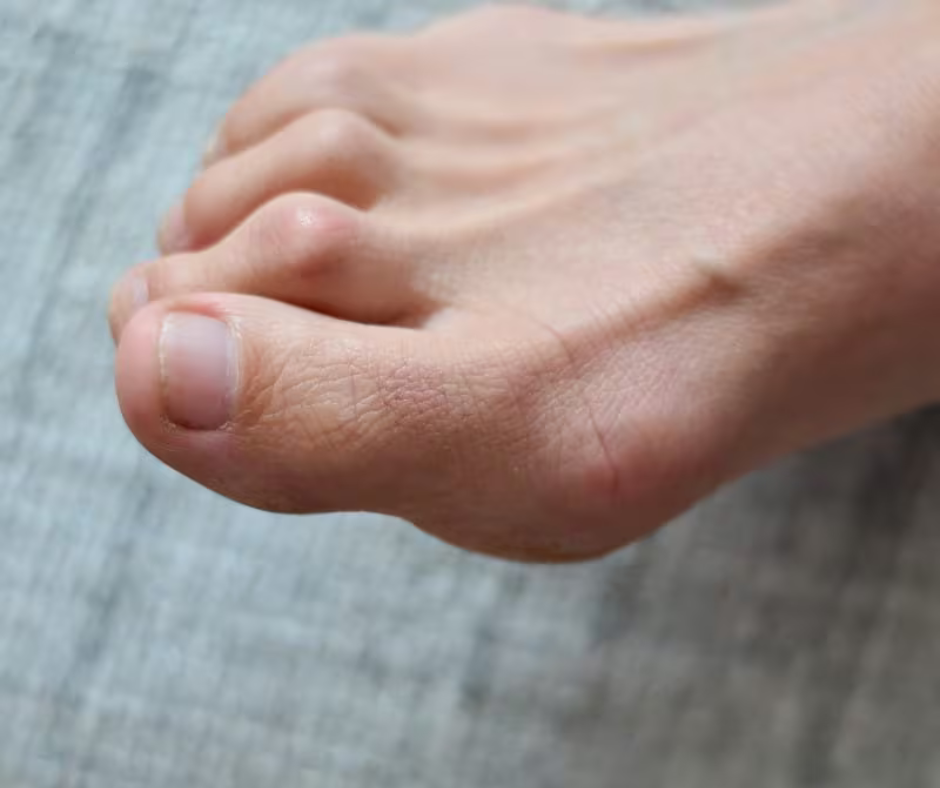
You take off your shoes after a long day, and you notice something concerning: your second, third, or fourth toe is no longer lying flat. It has started to curl downward at the middle joint, resembling the shape of a hammer or a claw.
At first, you might try to push it flat with your finger, assuming it’s just a temporary cramp from wearing tight shoes. But a Hammertoe is not just a cosmetic quirk; it is a progressive structural deformity caused by a muscle imbalance in your foot.
At Cypress Foot & Ankle Center, we frequently see patients who ignore these early warning signs. Unfortunately, hammertoes do not resolve on their own. Left untreated, a manageable bend will eventually lock into place, turning everyday walking into a painful chore. Keep reading to learn how you can stop that from happening.
The Root Cause: The Muscle Tug-of-War
Your toes are controlled by a delicate balance of muscles and tendons: some pull the toes up (extensors), and some curl them down (flexors).
When these groups get out of sync, the flexors overpower the extensors, pulling the joint into a permanent bend.
This imbalance is usually triggered by:
- Improper Footwear: High heels and narrow, pointed-toe boxes physically cramp the toes, artificially holding them in a bent position for hours. Over time, the tendons adapt and tighten into this unnatural shape.
- Faulty Mechanics: Having flat feet or extremely high arches forces the small muscles in your toes to work overtime to stabilize your foot, leading to rapid fatigue and contracture.
- The “Bunion” Effect: As a bunion forces your big toe to drift sideways, it often physically pushes your second toe up and out of the way, forcing it to curl.
The Clock is Ticking: Flexible vs. Rigid
When assessing a hammertoe, the most important factor is the timeline.
The Flexible Stage (The Golden Window)
- In the early stages, the joint is still mobile. You can physically take your finger and straighten the toe out to lie flat.
- If your toe is still flexible, you can successfully manage the deformity and stop the progression using non-surgical treatments.
The Rigid Stage (The Point of No Return)
- Over time, the tight tendons shrink permanently, and the joint essentially fuses in the bent position. You can no longer straighten the toe.
- Once a hammertoe becomes rigid, conservative treatments can only manage the pain. To physically straighten the toe, surgical correction is required.
The Warning Signs (Beyond the Curl)
Living with a hammertoe goes beyond aesthetics.
Watch for these uncomfortable symptoms:
- Corns and Calluses: Thick, painful patches of skin developing directly on top of the bent joint or at the tip of the toe due to constant shoe friction.
- Shoe Pain: Difficulty fitting into your normal size because the bent toe hits the top of the toe box.
- Joint Stiffness: Tightness or restricted movement that worsens over time.
How We Stop the Progression
The good news is that early treatment provides excellent relief. At Cypress Foot & Ankle Center, we take a personalized approach based on the severity of your joint.
You’ve got two ways to go:
1. Conservative Care (For Flexible Toes):
- The Shoe Check: Switching to footwear with a wide, deep toe box to eliminate top-down pressure.
- Custom Orthotics: We design prescription inserts to correct the underlying biomechanical issues (like flat feet) that caused muscle imbalance in the first place.
- Padding and Splinting: Strategic taping or non-medicated pads to reduce friction and gently encourage proper alignment.
2. Surgical Correction (For Rigid Toes):
If the toe has locked into place and pain is dictating your lifestyle, our experts can perform advanced, minimally invasive surgical correction to release the tight tendon, realign the bone, and restore your ability to walk comfortably.
Don’t Wait for the Joint to Lock
Your toes should not dictate what shoes you can wear or how far you can walk. If you notice a bend forming, acting now can save you from the operating room later
Experiencing pain or seeking preventative care? Cypress Foot & Ankle Center offers a wide range of services to address all your foot and ankle needs. While we focus on non-surgical treatments, our team also provides advanced surgical procedures when necessary, using the latest technologies to ensure superior outcomes. Call (281) 377-4040 or contact us online.